



Reasonable Risk
Manage Cyber Risk in One Defensible GRC Platform
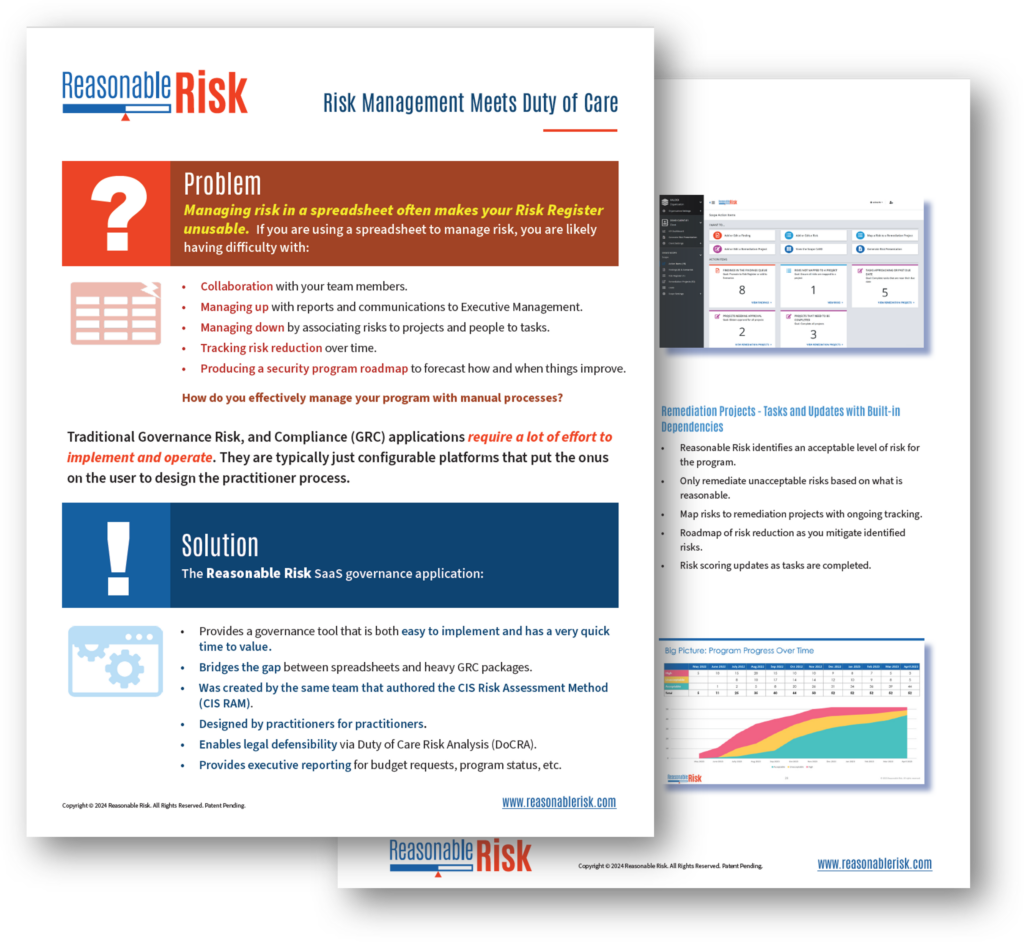
Reasonable Risk is a cyber risk management platform that brings risk data, remediation tracking, executive reporting, and governance into one system. It replaces disconnected spreadsheets and risk registers with a structured way to identify risk, define acceptable risk, track treatment, and show progress over time.
The GRC platform applies Duty of Care Risk Analysis (DoCRA) principles so organizations can connect cybersecurity decisions to business impact, reasonable safeguards, and documented risk acceptance.
HALOCK Security Labs has partnered with Reasonable Risk to provide implementation and consulting services for the only GRC SaaS Solution that automates risk management.
Download Reasonable Risk Overview
Why Reasonable Risk Matters
Cyber risk is a governance and business issue, not only a technical problem. Security leaders need to explain which risks matter, what action is required, how much risk remains, and whether investments are producing measurable improvement.
Reasonable Risk helps organizations:
- document cybersecurity decisions;
- translate technical risk into business terms;
- define a clear threshold for acceptable risk;
- prioritize remediation;
- track risk reduction over time;
- connect remediation projects with budget decisions;
- provide executive-level program reporting.
This gives leadership a clearer view of security progress and supports more defensible decisions.
DoCRA-based risk analysis helps organizations determine which risks can be accepted and which require additional safeguards. Instead of treating every finding as equally urgent, the platform helps direct resources toward risks above the organization’s defined acceptance threshold.
Contact Us
Manage Risk and Remediation
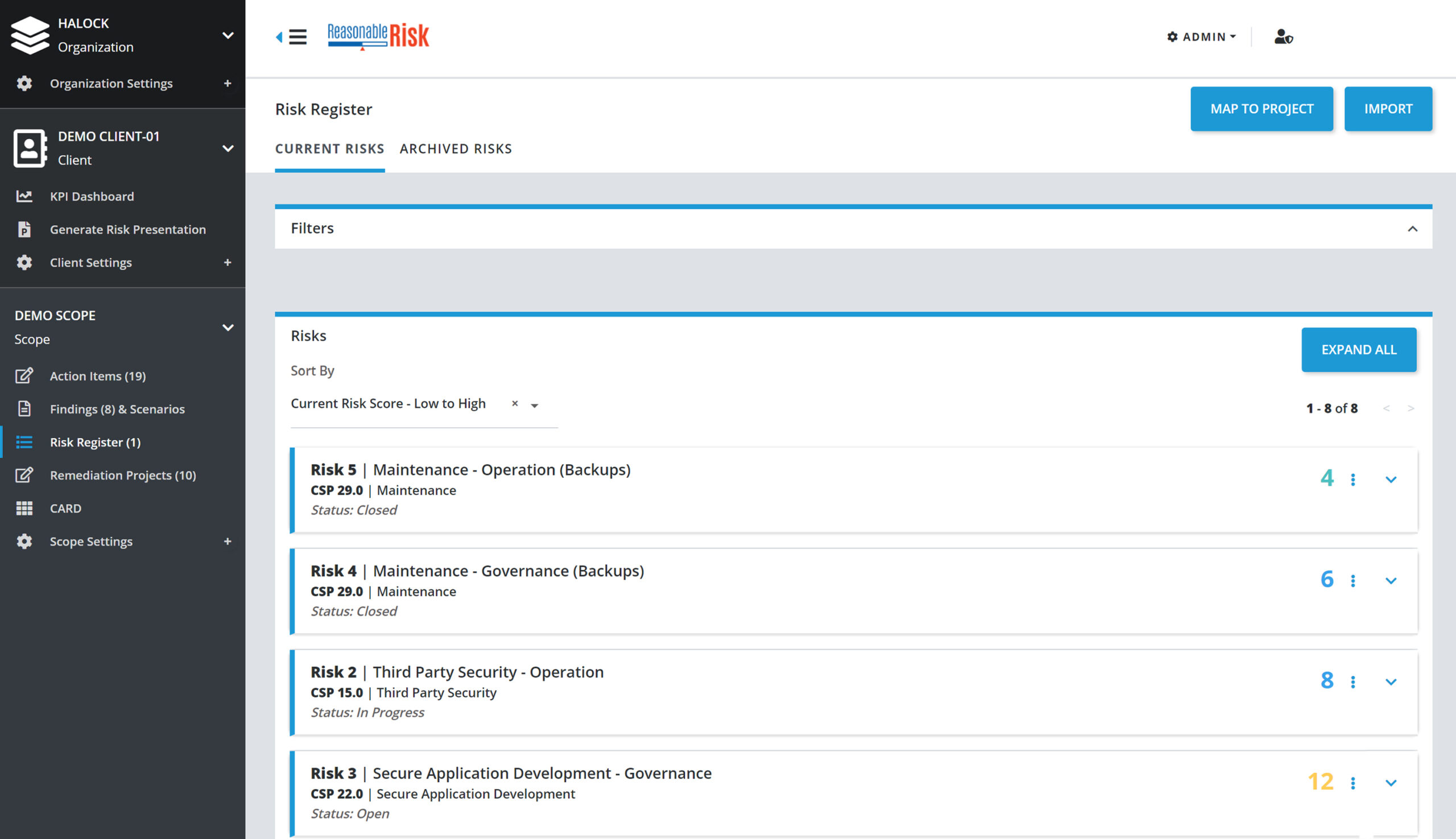
The Reasonable Risk GRC platform provides a central risk register with DoCRA-based scoring, role-based permissions, audit logging, aging alerts, and scenario modeling.
Organizations can:
- identify and prioritize risks;
- import assessment findings;
- model proposed safeguards;
- map unacceptable risks to remediation projects;
- assign tasks and dependencies;
- track remediation progress;
- update risk scores as work is completed;
- compare planned risk reduction with actual results.
This connects risk assessment with the work required to reduce risk. Teams can see not simply whether a finding is open or closed, but whether remediation is producing the expected change in risk.
Executive Reporting and Budget Decisions
Reasonable Risk helps security leaders communicate program status, remaining risk, planned remediation, and budget requirements in terms executives can use.
Dashboards and reporting show:
- overall risk posture;
- open unacceptable risks;
- remediation progress;
- planned versus actual risk reduction;
- changes in program status over time;
- project and risk-level budget information.
Executive reporting helps connect cybersecurity priorities to investment decisions. Leadership can see where funding is required, what risk reduction a project is expected to produce, and whether completed work achieved the intended result.
This connects cyber risk management solutions to governance, accountability, and budget decisions.
Reasonable Risk GRC Platform Features
Key capabilities include:
- DoCRA-based risk identification and prioritization;
- centralized risk and finding management;
- role-based permissions and audit logs;
- alerts for risks and findings that remain unresolved;
- remediation projects with task dependencies;
- risk-score updates as remediation progresses;
- scenario modeling for proposed safeguards;
- executive dashboards and presentation reporting;
- budget and program-progress tracking.
The objective is to create one consistent record of risk, decisions, remediation, and progress rather than maintaining separate spreadsheets, project plans, and executive reports.
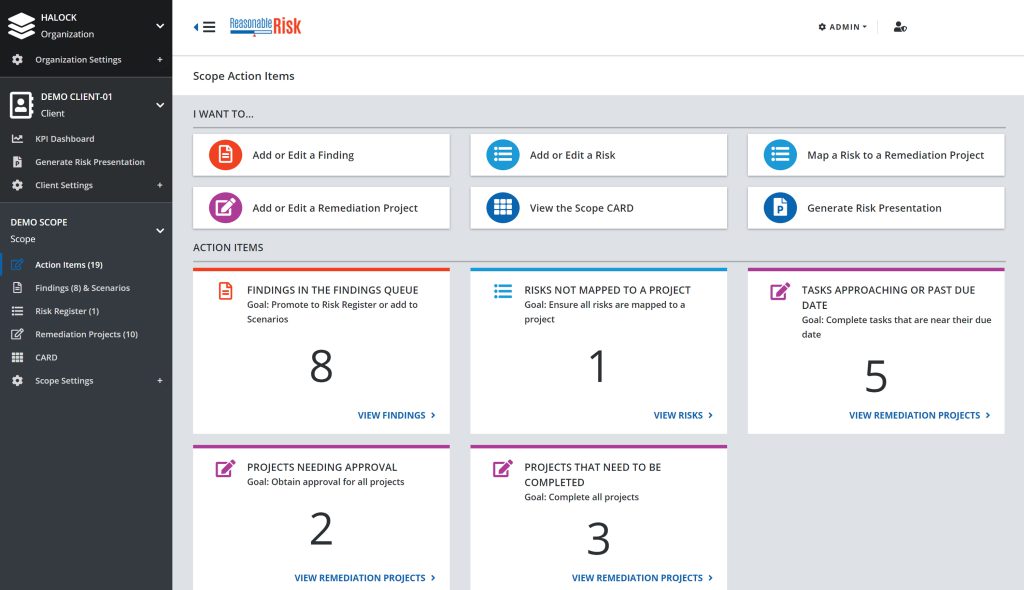
- Facilitates risk identification, definition, and prioritization with DoCRA-based scoring in an easy-to-use Risk Register.
- Different user roles with a variety of permissions and audit log.
- Alerts users on findings and risks that have gone unaddressed for specified periods of time.
- Sandbox capabilities for assessment “Findings” and remediation snapshots, or “Scenarios,” to model safeguard controls.
Remediation Projects – Tasks and Updates with Built-in Dependencies

- Reasonable Risk identifies an acceptable level of risk for the program.
- Only remediate unacceptable risks based on what is reasonable.
- Map risks to remediation projects with ongoing tracking.
- Roadmap of risk reduction as you mitigate identified risks.
- Risk scoring updates as tasks are completed.
Executive Reporting and Budget Approval
- Simple Wizard for instant executive report PPT presentations.
- Pre-mapped field data instantly imported with meaningful findings, risks, projects, and tasks.
- Visualize program progress over time and identify program changes.
- Visualize planned vs. actual risk reduction, and list of identified unacceptable risks.
- Budget requests and budget variances and why.
- Project-level & risk-level budget details.
Reasonable Risk FAQs
What frameworks does Reasonable Risk support?
Reasonable Risk is rooted in DoCRA and supports integration with common cybersecurity frameworks and standards.
Can existing risk data be imported?
Yes. Existing risks and findings can be imported using supported templates.
Is onboarding available?
Yes. Onboarding and product support are provided through Reasonable Risk integrators and representatives.
How is pricing determined?
Pricing is based on the number of risk scopes and contract terms, with unlimited users supported per instance.
