



CIS Security Assessment
CIS Security Assessment
Evaluate Security Controls Against Real Threats
A CIS security assessment evaluates whether current security controls provide effective protection against the threats most relevant to the organization. HALOCK combines CIS Critical Security Controls with threat intelligence and risk analysis to identify weaknesses in architecture, technology, policy, and procedures. Instead of simply measuring control maturity, the assessment prioritizes gaps based on how likely and damaging exploitation could be.
What a CIS Security Assessment Includes
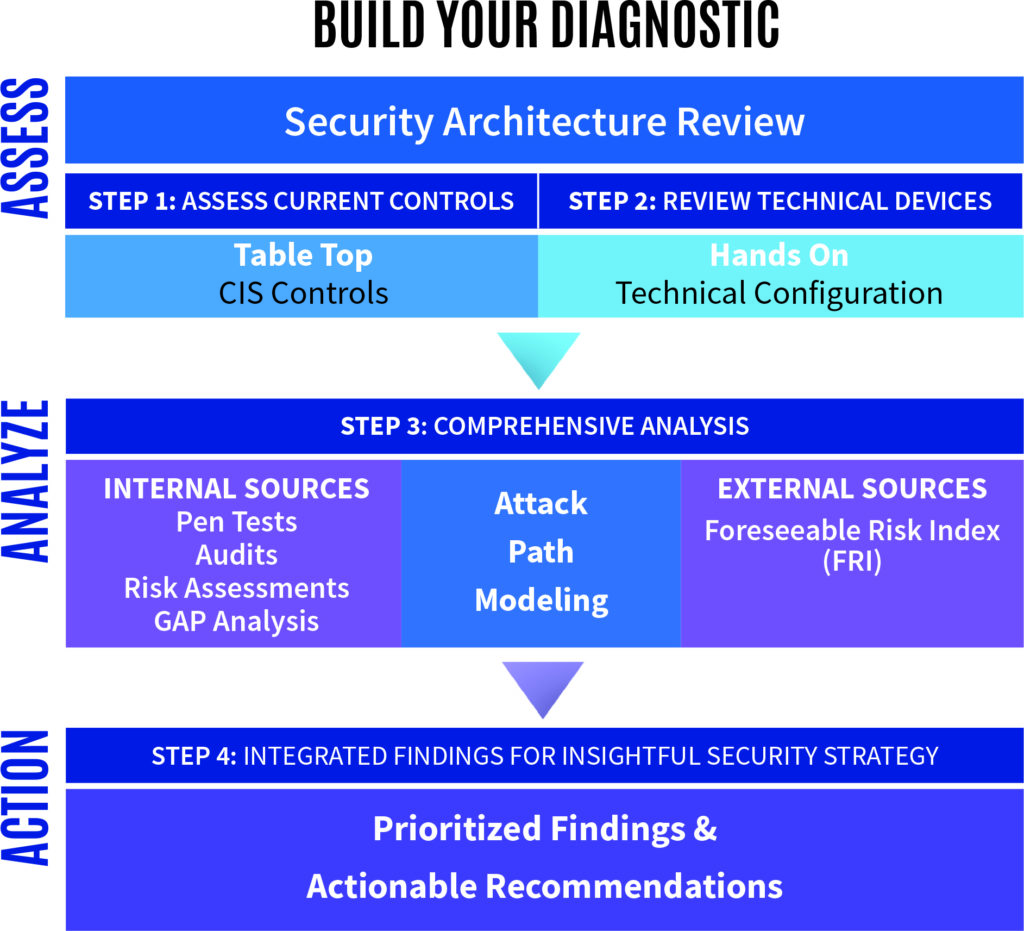
Your CIS Based Security Assessment and report offers you the full picture with a comprehensive review of your current security architecture, including:
- network design;
- system configurations;
- cloud environments;
- technical controls;
- defensive technologies;
- policies and procedures;
- supporting documentation.
The resulting CIS Controls assessment provides an executive summary, details of findings, attack path modeling, prioritized recommendations, and a roadmap for strengthening defenses.
Why Choose HALOCK for a CIS Security Assessment?
HALOCK combines decades of security architecture, threat assessment, and risk-management experience. The assessment connects technical findings to real attack scenarios and business risk so executives and technical teams can understand:
- where controls are weak;
- which weaknesses matter most;
- what an attacker could exploit;
- what should be improved first.
The resulting documentation can also support audit, compliance, resilience, and broader security-program improvement.
Security Architecture Review
A security architecture review evaluates how controls work together rather than looking only at individual devices. HALOCK reviews diagrams, configurations, and stakeholder input to identify systemic weaknesses involving:
- segmentation;
- remote access;
- wireless security;
- control integration;
- cloud design;
- network architecture.
This helps reveal gaps that isolated device checks can miss.
Prioritize Security Gaps by Risk
A control deficiency does not automatically have the same significance as every other deficiency.
HALOCK evaluates how gaps relate to likely threats, attack paths, affected assets, and potential business impact. This creates a more useful cybersecurity gap assessment by distinguishing high-value remediation opportunities from lower-priority maturity issues.
Recommendations are prioritized according to actual exposure rather than the order in which controls appear in a framework.
CIS Security Assessment FAQs
How is this different from a traditional security audit?
A traditional audit often measures compliance with a control list. HALOCK also evaluates how those controls perform against likely threats and prioritizes gaps according to business risk.
How long does an assessment take?
Timing depends on the size and complexity of the environment. The current HALOCK service generally runs from several weeks to about one month from scoping through final reporting.
Does the assessment include remediation guidance?
Yes. Reporting includes prioritized recommendations tied to the risk created by the findings.
Can the assessment support compliance?
Yes. CIS Controls overlap with requirements in frameworks and regulations such as NIST, HIPAA, and PCI DSS, so assessment documentation can support broader compliance efforts.
Contact Us
