



AI Risk Management and Governance
Regulators and standards bodies in the United States and the European Union have begun to call out the need for AI Risk Assessments, and governance to manage those AI risks.
Since the unveiling of ChatGPT 3.5, business adoption of Generative AI has been as much about strategy and opportunity as it has been about Fear of Missing Out.
But business leaders, technicians, and regulators all know that Generative AI presents risks that are not immediately obvious.
Agentic cascading errors, intellectual property violations, bias, hallucinations, and rapid threat development all pose threats, both inside and outside of our organizations.
Regulators and standards bodies in the United States and the European Union have begun to call out the need for AI Risk Assessments, and governance to manage those AI risks.
California’s CCPA and the EU’s AI Act both require risk assessments to balance the benefits of using AI against the risks to the public. ISO 42001 and NIST’s AI Risk Management Framework tell us how risk management should work. And ETSI TR 103 935 states that companies that do business in the EU single market must conduct risk assessments using DoCRA.
Reasonable Security
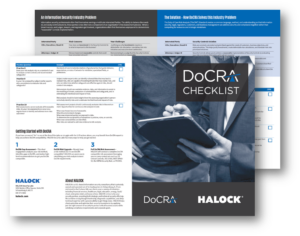
What is an AI Risk Analysis?
At its simplest, AI risk analysis is a series of decisions that help us balance risks and benefits. For example, when organizations know the kinds of threats that can harm them and others, they can determine whether risk mitigation is needed in certain use cases.
If a safeguard is less burdensome than the risk It reduces, it is reasonable to use that safeguard, and to use AI in that use case.
Why Choose HALOCK AI Risk Analysis Services
AI Governance requires that businesses know that their use of AI provides a benefit to everyone that is greater than the risk it creates for anyone. This is the basis of the new CCPA updates and the EU AI Act. And this is why DoCRA is now cited in the US and the EU as the method for balancing innovation with public protection.
HALOCK’s AI Risk Analysis uses DoCRA to:
- Detect AI tools that are currently in-use in your company.
- Understand the business cases for using those AI tools.
- Evaluating the risk-benefit of using those tools.
- Identifying reasonable safeguards when risks exceed benefits.
- Setting policies for using AI tools with reasonable safeguards.
Contact us so we can show you how our clients use AI Risk Assessments as part of their AI Governance capabilities, and regulatory compliance.
View our Technology Partners that address AI
Enterprise Use at Scale
Your Content Goes Here
Generative AI Security Assistant
Your Content Goes Here
