



By Cindy Kaplan
The plastic surgery industry and beauty medspa field are undergoing a digital makeover thanks to artificial intelligence (AI). From virtual skin analysis and treatment simulation to robotics and automated client engagement tools, AI solutions are enabling personalized care, streamlining workflows, and creating new opportunities to compete. However, they also pose numerous risks related to cybersecurity, regulation, legal liability, and ethical considerations.
New technologies help refine procedures and ideally improve upon recovery and results. More new tools to help streamline the aesthetic experience surface continuously. Consultations now feature AI-guided procedures like LipoAI, 3D virtual simulations, facial analysis, and more. AI can also enhance skillsets by offering virtual training on new procedures.
Clinics must understand their exposures to practice responsibly and implement proper AI governance to thrive in the long-term in this competitive industry. Here’s what you need to know about AI security risk in the world of plastic surgery and beauty.
Applications of AI in Plastic Surgery and Beauty Services
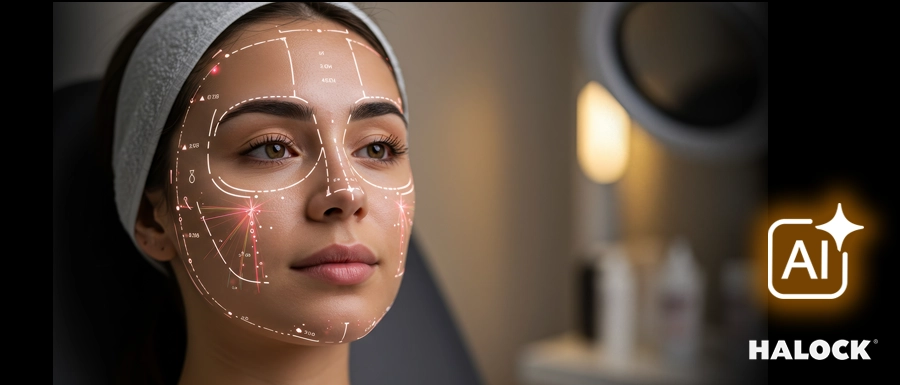
- Virtual skin diagnostics are AI solutions used by clinics to conduct thorough skin analysis, evaluating wrinkles, pores, pigmentation, spots, and skin aging patterns. Tools like the AI skin diagnostic application offer custom treatment suggestions and even provide “before and after” visual simulations to help set patient expectations.
- AI chatbots are rapidly becoming popular tools that help medspas automate client outreach, appointment setting, and client intake tasks. By automating these responsibilities, chatbots free up employee time and allow for more responsive client communication.
- Robotics isn’t yet commonly used for actual procedures in plastic surgery or dermatology. However, technology supports laser treatments and other precision procedures that historically could only be completed by highly trained specialists. Vision-based AI applications and robotics promise to make certain treatments easier than ever, but practical use of these technologies is still somewhat limited.
- AI Predictive Modeling is also used to estimate surgical results and postoperative recovery. These tools can help surgeons and clients alike visualize likely aesthetic outcomes before making treatment decisions. Prediction models should never be fully relied upon without a surgeon’s input and validation.
Regulatory and Ethical Risks Specific to AI Applications
The following regulatory and ethical concerns are unique to AI problems that practices should know about and actively manage.
- Making medical decisions without a doctor’s input. While AI technology has advanced significantly in recent years, artificial intelligence cannot replace human judgment. Tools that provide patients with treatment suggestions based on photo analysis alone run the risk of providing harmful or undesirable treatment suggestions. AI technologies that suggest specific treatments or adjustments to medical care risk not adhering to practice rules that require licensed physician oversight for medical decisions. Treating an AI-generated suggestion like clinical advice from another provider without supervision or confirmation opens a practice up to potential liability for malpractice.
- Failure to disclose AI use during consent. Patient intake forms and consent documents should always disclose the use of AI applications as part of clinic services. While some AI applications can automatically generate portions of consent forms, this technology is unlikely to account for state-by-state variations in required disclosures. If your consent form generators rely on AI automation without review, they likely run afoul of state or federal regulations.
- Inaccurate Marketing Claims. Similarly, clinics need to be careful not to overpromise results when advertising AI features. Healthcare is heavily regulated, and many state medical boards include AI diagnostics and other technology under their regulatory authority. Promoting your business on unproven claims that your AI application offers clinical benefits like diagnostic functionality or can predict surgical results opens your business up to regulatory scrutiny and enforcement. Even if your marketing messages are technically true, improper representation of your services can expose a practice to civil penalties or false advertising claims.
- Discrimination and AI Fairness. Since AI technology “learns” from examples, there is a risk that AI applications will develop biases based on their training data. If certain demographics are underrepresented in the skincare concerns or if treatment recommendations are calibrated to lighter skin more frequently than darker skin tones, clinicians run the risk of discriminatory service practices, patient harm, or worse. While some industries are actively working to prevent this kind of problem, aesthetic medicine currently lacks standardized requirements for ethical AI implementation.
Potential Ugly Cybersecurity Risks Posed by AI in Plastic Surgery Practices
- Sensitive patient data. Plastic surgery procedures and medspa treatments often create digital records like images, biometric measurements, and skin condition data. AI applications that process information about a patient’s appearance or treatment history are likely processing protected health information (PHI), which qualifies as sensitive data under many cybersecurity and privacy regulations.
- Clinics have been hacked. Cybercriminals are attacking aesthetic medicine clinics, just like other healthcare providers. When this happens, patients’ personally identifiable information (PII) and health data are exposed to theft and misuse.
- Ransomware, cloud storage failures, and data breaches are common. These kinds of attacks target clinic electronic health records and stored imaging files, such as patients’ “before and after” galleries. If your clinic hosts images of patients online for marketing purposes, you should assume that a skilled hacker will be able to access those files too. Once acquired, hackers may attempt to sell or leak those images on the dark web, where your patients’ PII could be exposed to identity theft.
- AI can be used maliciously as well. As mentioned earlier in this article, cybercriminals are using AI technology for automation as well. This includes automating social engineering attacks like phishing emails. Every connected device expands a practice’s attack surface, which is why AI solutions should be implemented with security in mind.
Freshen Up on Your Regulatory Obligations and Compliance
The healthcare industry is governed by many regulatory requirements. Some key regulations include:
- FDA — Medical Device Regulation (AI/ML as Software as a Medical Device). If an AI system used by a plastic surgery practice or medspa meets the definition of a medical device (e.g., clinical diagnostic tools, imaging analysis, risk stratification tools), the U.S. Food and Drug Administration (FDA) regulates it under the Federal Food, Drug, and Cosmetic Act. An AI tool will require FDA authorization if it is presented as a clinical decision-support tool rather than a simple cosmetic guidance aid.
- HIPAA — Health Insurance Portability and Accountability Act. When AI systems handle Protected Health Information (PHI), which includes identifiable health information from patients, the practice must comply with HIPAA privacy and security rules.
- Section 1557 of the Affordable Care Act (Anti-Discrimination) requires healthcare entities to ensure AI tools do not produce discriminatory decisions in patient care based on protected traits (race, sex, age, disability, etc.). Section 1557 prohibits discrimination through the use of algorithms in decisions affecting patient services.
- FTC — Federal Trade Commission Consumer Protection Enforcement. The FTC enforces consumer protection laws that apply to AI systems used in marketing, advertising, and patient interaction.
Best practice is to regularly assess your security posture as your operations evolve and new technologies are developed. Managing your risk and legal obligations is essential.
Ensuring AI Deployments Are Secure and Legally Defensible
As with any clinic technology, medical practices have a legal duty to ensure tech deployments do not jeopardize patient safety. When it comes to AI applications in the clinic setting, your legal exposure will likely be judged by whether your practice acted reasonably when implementing those technologies.
Duty of Care Risk Analysis (DoCRA) is a technique that can help organizations approach AI technology (and any other tech tool) responsibly by:
- Recognizing potential harms. (i.e., biased treatment recommendations)
- Weighing potential safeguards against the burden they create. (Are there easy ways to block privacy risks?)
- Documenting the decision-making process behind tech purchases. (Who is responsible for AI governance?)
- Ensuring accountability is maintained for clinical decisions.
This last point is particularly important for cosmetic surgery and dermatology. Physicians should always be involved in medical decisions, even if AI is being used to power treatment plans.
Clinics that approach new technology with DoCRA in mind will be in a better position to demonstrate reasonable care when facing cybersecurity incidents, regulatory inquiries, or malpractice claims.
What are DoCRA and Reasonable Security? How are they related?
Final Thoughts
The truth about AI in plastic surgery and aesthetic medicine is that it comes with risks but also amazing opportunities to grow your business and improve patient care. By understanding cybersecurity risks before buying technology and monitoring your systems for abuse, clinics can protect their patients and themselves from the most common threats.
With the widespread use of AI (artificial intelligence), understand your security and risk profile for your operations.
AI. Reasonable Security. DoCRA.
7 HIPAA Security Tips for Managing AI Risk
Why Identity is the “New Perimeter”: Deepfakes and Attackers Leveraging AI
Healthcare Web Application Penetration Testing: Offensive Security to Protect Patient Data
Surgical Device Cybersecurity: Understanding AI and Medical Device Risks in Healthcare
References
AI in healthcare: Beware of cyber risks. (n.d.). The HIPAA eTool.
Medspa AI legal risk overview. (n.d.). Weitz Morgan.
AI and liability in aesthetic practice. (n.d.). The Aesthetic Guide.
AI bias and equity in medspa AI solutions. (n.d.).
AI’s role in aesthetic medicine & dermatology. (2025). Modern Aesthetics.
AI adoption in medspa practice. (n.d.). Medspa Millions.
Robotics used in cosmetic surgery procedures. (2020). arXiv
AI can help predict aesthetic surgery outcomes. (2025). PubMed.
Review Your AI Security and Risk Posture
Review Your CoPilot Security Position
Read more AI (Artificial Intelligence) Risk Insights
