



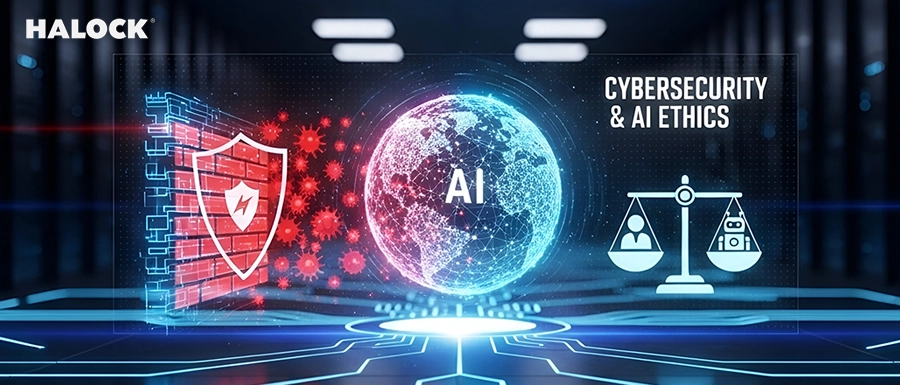
As organizations adopt artificial intelligence (AI), automation, and cloud-native platforms, they’re finding that these technologies don’t just supercharge what they can do. They introduce more risk in a hyper-accelerated environment that strains traditional security programs. New data and model training practices raise data exposure risk. Autonomous and adaptive systems can act in unexpected ways when attacked. Shadow AI tools give rise to uncontrolled data flows and noncompliant behaviors. Regulatory agencies, state attorneys general, and industry frameworks are increasing pressure on organizations to prove they have reasonable security and a defensible approach to risk.
HALOCK helps organizations stand up security and compliance programs with clear-eyed confidence, even in this environment of emerging threats and technologies. Our risk assessments are based upon Duty of Care Risk Analysis (DoCRA), with a deep understanding of reasonable security and defensibility to create programs that are secure, legally defensible, and, importantly, sustainably governed.
AI Expands Attack Surface
As organizations adopt new technologies, the modern attack surface is growing. This is particularly true with AI. Adopting and using AI changes the risk equation in the following ways:
- Model manipulation and poisoning. Training data can be influenced by attackers, manipulated inputs injected, or outputs generated to trick a system.
- Data exposure through generative tools. AI tools often retain user prompts and training data, raising privacy, regulatory, and IP risks.
- Shadow AI and unsanctioned automation. Employees test and use unsanctioned AI, circumventing risk controls and introducing noncompliant uses.
- Supply chain risk. Most AI uses today live on third-party platforms, creating shared responsibility risk.
- Uncertain regulatory expectations. State, federal, and industry regulators will increasingly expect organizations to show their AI-enabled systems are risk-based and governed by reasonable security controls.
Organizations have an opportunity to responsibly harness the risk and reward of AI, but that requires more structured, practical, and legally defensible risk analysis than they may have done before. HALOCK risk assessments provide that structure.
HALOCK’s Unique Approach
HALOCK has unique insight and is a recognized leader in DoCRA, reasonable security, and CIS RAM. These frameworks guide our risk assessments so organizations can responsibly manage risk without slowing innovation.
Duty of Care Risk Analysis (DoCRA)
HALOCK helps organizations make decisions about risk that are balanced, defensible, and supportable to regulators, courts, customers, and internal decision-makers. DoCRA supports risk decisions that are:
- Fair to those potentially affected by a risk decision
- Appropriate to the level of risk and the organization’s capacity to control it
- Defensible in a legal, regulatory, public, or customer setting
In the context of AI, DoCRA helps organizations answer:
- Are we protecting those who might be harmed by the use of AI in our business?
- Are our safeguards reasonable, given the size, scope, and purpose of the organization and the technology?
- Could our decisions be explained and justified if we were called into court, a regulator’s office, or a public setting?
HALOCK Reasonable Security Framework
The term “reasonable security” comes from regulatory agencies and courts, and HALOCK is well-versed in how regulators use the term when determining compliance and negligence. In practice, HALOCK’s risk assessments are based on a mapping to controls that are considered reasonable by regulators, other frameworks, and industry peers for similar organizations and similar technology.
In the context of AI-enabled systems, HALOCK helps organizations understand what reasonable security looks like when it comes to:
- Training and validating machine learning models
- Protecting data used as inputs, model payloads, or metadata
- Oversight of vendors, third-party services, and platform ecosystems
- Monitoring for anomalous AI system behavior
- Planning for and responding to AI-related incidents
CIS RAM: Building Practical and Defensible Risk Decisions
The CIS RAM is a standardized way to evaluate safeguards, threats, and potential harm. HALOCK coauthored CIS RAM, and we use it to help organizations create risk programs that are practical and defensible by regulators. This is crucial in the context of AI systems where complexity and scale can obscure sound decision-making.
CIS RAM and HALOCK’s security, privacy, and risk assessments help ensure that:
- Safeguards are prioritized based on their ability to measurably reduce risk
- Controls are proportionate to the harm they are intended to prevent
- Risk acceptance decisions follow a repeatable and transparent process
- Assessment documentation supports legal defensibility
Legal Defensibility Becomes a Strategic Imperative
HALOCK assessments always come in with an eye to aligning with regulatory expectations. This includes regulators like the SEC and FTC, consumer privacy laws, and state reasonable security requirements. As AI takes on a larger role in business operations, regulators will expect organizations to explain and defend how they protect the people who use their systems.
HALOCK can help ensure AI-related risk decisions are:
- Documented
- Traceable
- Reasonable
- Rooted in widely accepted frameworks
- Defensible to auditors, boards, clients, and regulators
HALOCK builds risk programs that keep pace with AI
AI is not slowing down, and neither should security. HALOCK’s approach helps organizations build risk programs that grow with innovation rather than in a reactive mode.
We work with teams to:
- Establish AI governance policies and guardrails
- Define AI acceptable use and shadow AI management policies
- Evaluate vendors, LLM platforms, and APIs for controls and compliance
- Integrate AI risks into enterprise cybersecurity strategy
- Enhance incident response to consider AI-specific compromise scenarios
- Continuously monitor and reassess risk as models and uses evolve
HALOCK risk assessments create structure around technological change so organizations can confidently and responsibly adopt AI.
Why Choose HALOCK
HALOCK combines technical expertise with legal and regulatory acumen. HALOCK’s risk assessments give decision-makers not only answers, but a roadmap to responsible innovation.
Organizations choose HALOCK because we can provide:
- A proven, recognized methodology that regulators know
- Risk analysis that is rooted in notions of fairness and accountability
- Recommendations that fit within the realities of operations
- Documentation that supports the defensibility of risk decisions
- A security program that is aligned with the organization, evolving AI technology, and emerging threats
- AI amplifies opportunity. HALOCK makes sure security grows alongside it.
To successfully approach managing risk in the age of AI, organizations using AI should incorporate reasonable security into their risk strategy.
Establish reasonable security through the duty of care.
With HALOCK, organizations can establish a legally defensible security and risk program through Duty of Care Risk Analysis (DoCRA). This balanced approach provides a methodology to achieve reasonable security as the regulations require.
Review Your AI Security and Risk Posture
Review Your CoPilot Security Position
Read more AI (Artificial Intelligence) Risk Insights
